Sales:
(888) 397-1874
Service:
(317) 831-0770
Parts:
(317) 831-0770
Open Today Sales: 9 AM-7 PM



Dually Tire Maintenance Guide
The Silverado 3500HD DRW utilizes six tires requiring specialized rotation and pressure management. This scheduled maintenance is vital for maximizing commercial tread life under heavy payloads. Schedule your professional tire rotation at our Camby service center to protect your investment.
Upgrading to a Dual Rear Wheel (DRW) configuration provides unmatched stability for hauling massive gooseneck trailers. However, adding an extra pair of tires to the rear axle completely changes how you approach routine wheel maintenance. Managing six separate contact patches requires a specific understanding of rotation limits and pressure adjustments based on your payload. To see how these wheel configurations align with different trim levels and cab styles, review our complete 2026 Chevy 1-ton pickup overview. This guide isolates the exact tire care requirements for your heavy-duty commercial dually.
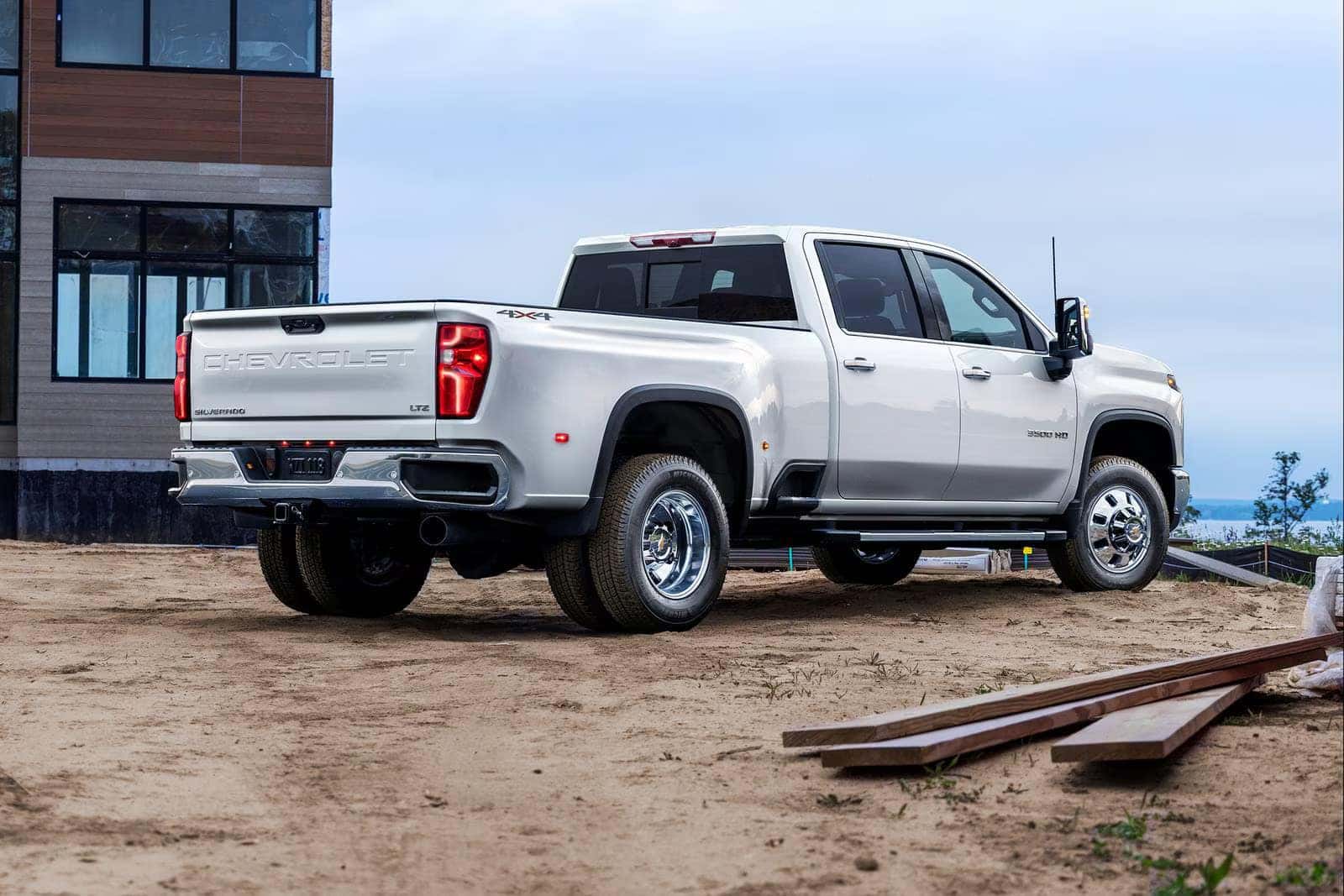
Unlike a standard pickup where you simply cross the front tires to the rear, a DRW truck introduces specific wheel materials and inner-versus-outer challenges.
| Maintenance Aspect | DRW (Dually) Rotation Nuances |
|---|---|
| Wheel Material Differences | Inner rear wheels are often steel, while outer rear and front wheels are polished aluminum. |
| Standard Rotation Pattern | Side-to-side swapping (Front left to front right; Rear inner left to rear inner right). |
| Full Positional Rotation | Requires professionally dismounting the rubber tires from the rims to move them front-to-back. |
| Rotation Interval | Every 7,500 miles, perfectly aligning with standard oil changes. |
Because the inner rear wheels are typically made of unpolished steel to cut down on weight and cost, you cannot simply unbolt an inner wheel and bolt it to the front steering axle. The most common DRW rotation strategy involves swapping the tires side-to-side to balance out the subtle steering wear. If you want to perform a true front-to-back rotation, our certified technicians must physically dismount the heavy-duty rubber from the wheels and remount them in their new positions.
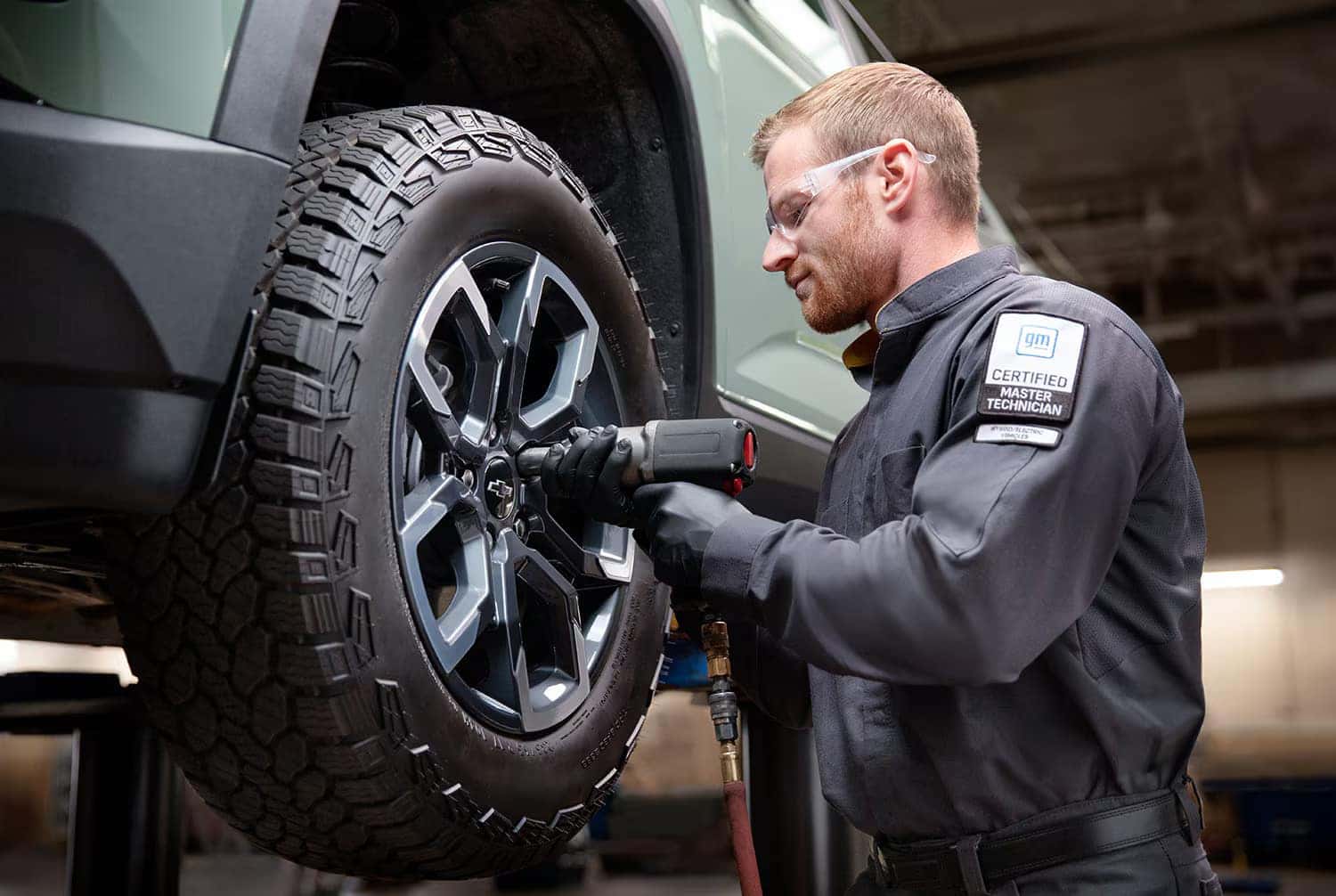
Tire pressure is the single most important factor in heavy-duty commercial hauling. The 3500HD requires vastly different inflation levels depending on whether the truck bed is empty or loaded to its 7,234-pound maximum.
When the truck is unloaded, running the rear dual tires at their maximum cold pressure will result in a harsh, bouncing ride. Dropping the rear PSI slightly improves daily ride comfort when driving empty around Mooresville. However, the moment you hook up a 36,000-pound fifth-wheel camper, you must inflate all four rear tires back to the maximum recommended cold PSI listed on your driver-side door jamb.
Under-inflated rear dual tires will bulge, causing the inner and outer sidewalls to rub against each other, generating catastrophic heat. To learn more about standard load ratings and sidewall safety, visit the NHTSA official tire safety portal.
Commercial enforcement officers strictly monitor tire health. Operating a 1-ton truck with bald inner rear tires can result in severe fines or an out-of-service order for your business.
Inspect the gap between your rear duals weekly to ensure no large rocks or construction debris have become wedged between the treads. Uneven cupping on the front steering tires is a primary indicator that your heavy-duty suspension requires a professional alignment. Staying ahead of this uneven tread wear is the best way to prevent dangerous blowouts when hauling heavy equipment down I-65 at highway speeds.
If your current heavy-duty fleet is suffering from constantly degrading suspension components or bent rims, it might be more cost-effective to upgrade. Determine your current vehicle’s worth instantly with our online trade-in appraisal tool, and apply that equity directly toward a brand new 2026 model.
Protect your dually’s tread life, safety, and commercial compliance. Schedule a certified tire service or explore upgrading to a brand new 3500HD today.
