Sales:
(888) 397-1874
Service:
(317) 831-0770
Parts:
(317) 831-0770
Open Today Sales: 9 AM-7 PM



The 2027 Chevrolet Bolt delivers 262 miles of EPA-estimated range on a single charge with 210 hp. The Kona runs a 147-hp gas engine, so this comparison spans two fundamentally different ownership experiences. Here is how every major category stacks up, with Bolt inventory available at Greg Hubler Chevrolet.
The 2027 Bolt wins for any buyer ready to ditch the gas pump. With 262 miles of range, native NACS fast charging, and standard V2H bidirectional capability, it is built for the driver who wants to eliminate fuel costs and charge at home overnight. The 2027 Kona is the choice for a buyer who wants a compact crossover with gas-engine flexibility, AWD availability, and a longer basic warranty. These two vehicles serve different priorities rather than the same one.
| Specification | 2027 Chevrolet Bolt | 2027 Hyundai Kona |
|---|---|---|
| Fuel Type | Electric | Gasoline |
| Horsepower | 210 hp | 147 hp |
| Torque | 169 lb-ft | 132 lb-ft |
| Drivetrain | FWD | FWD, AWD available |
| EV Range / MPG | 262 miles | 28 city / 35 highway FWD |
| Cargo, Seats Up | 16.2 cu ft | 25.5 cu ft |
| Max Cargo | 56.3 cu ft | 63.7 cu ft |
| Seating | 5 | 5 |
| Basic Warranty | 3 yr / 36,000 mi | 5 yr / 60,000 mi |
| Powertrain Warranty | 8 yr / 100,000 mi battery | 10 yr / 100,000 mi |
| Trims | LT, RS | SE, SEL Sport, SEL Premium, Limited |
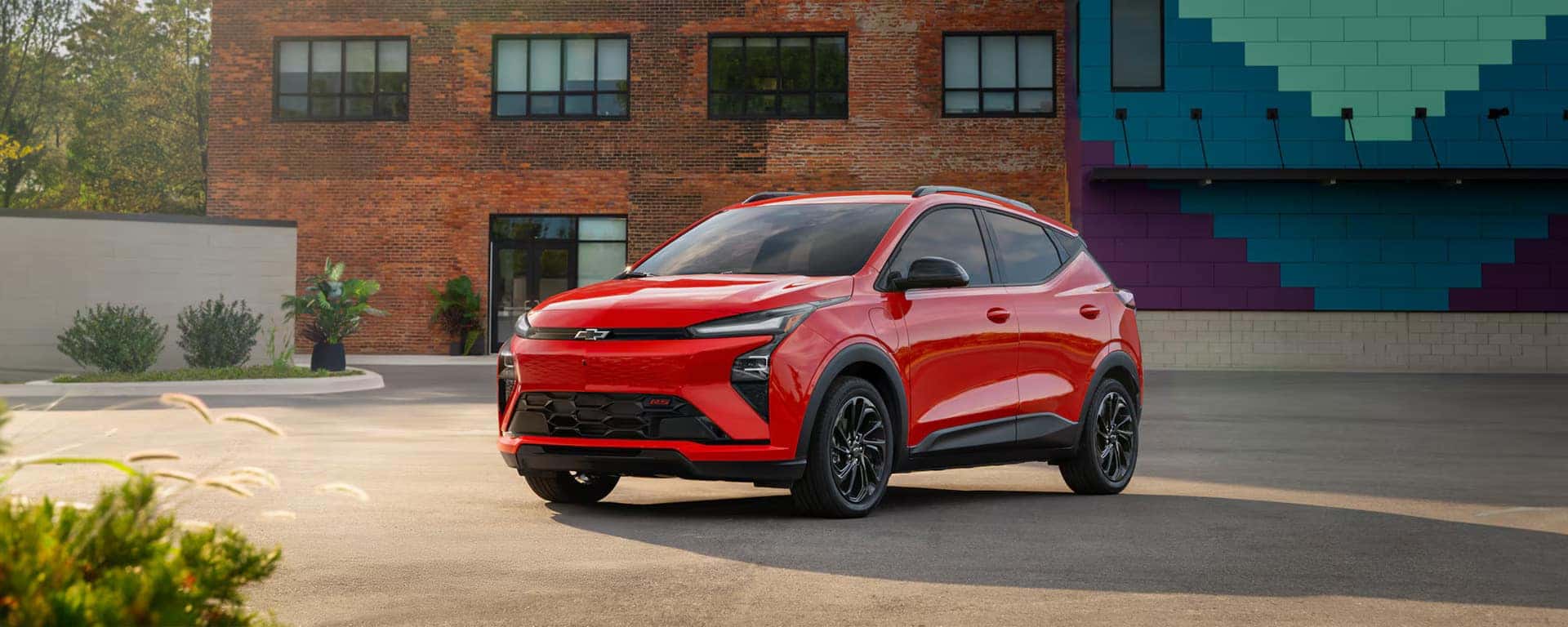
The Bolt’s 210-hp permanent-magnet electric motor delivers torque the moment you press the accelerator, with no gearshifts interrupting the pull. The direct-drive single-speed system keeps the experience linear and consistent whether you are merging onto I-465 or navigating surface streets through Camby.
The Kona’s 147-hp 2.0-liter Atkinson-cycle engine is adequate for daily errands, but it produces 63 fewer horsepower and 37 fewer lb-ft of torque than the Bolt. Higher Kona trims step up to a 190-hp 1.6-liter turbocharged four-cylinder, though even that engine trails the Bolt in immediate torque response.
The Bolt also offers One-Pedal Driving mode, letting you slow the vehicle through regenerative braking without touching the brake pedal. That feature recovers energy on every deceleration and reduces brake wear over time. The Kona offers no equivalent.
The Kona has one clear structural advantage here: AWD is available across its lineup. The Bolt is FWD only.
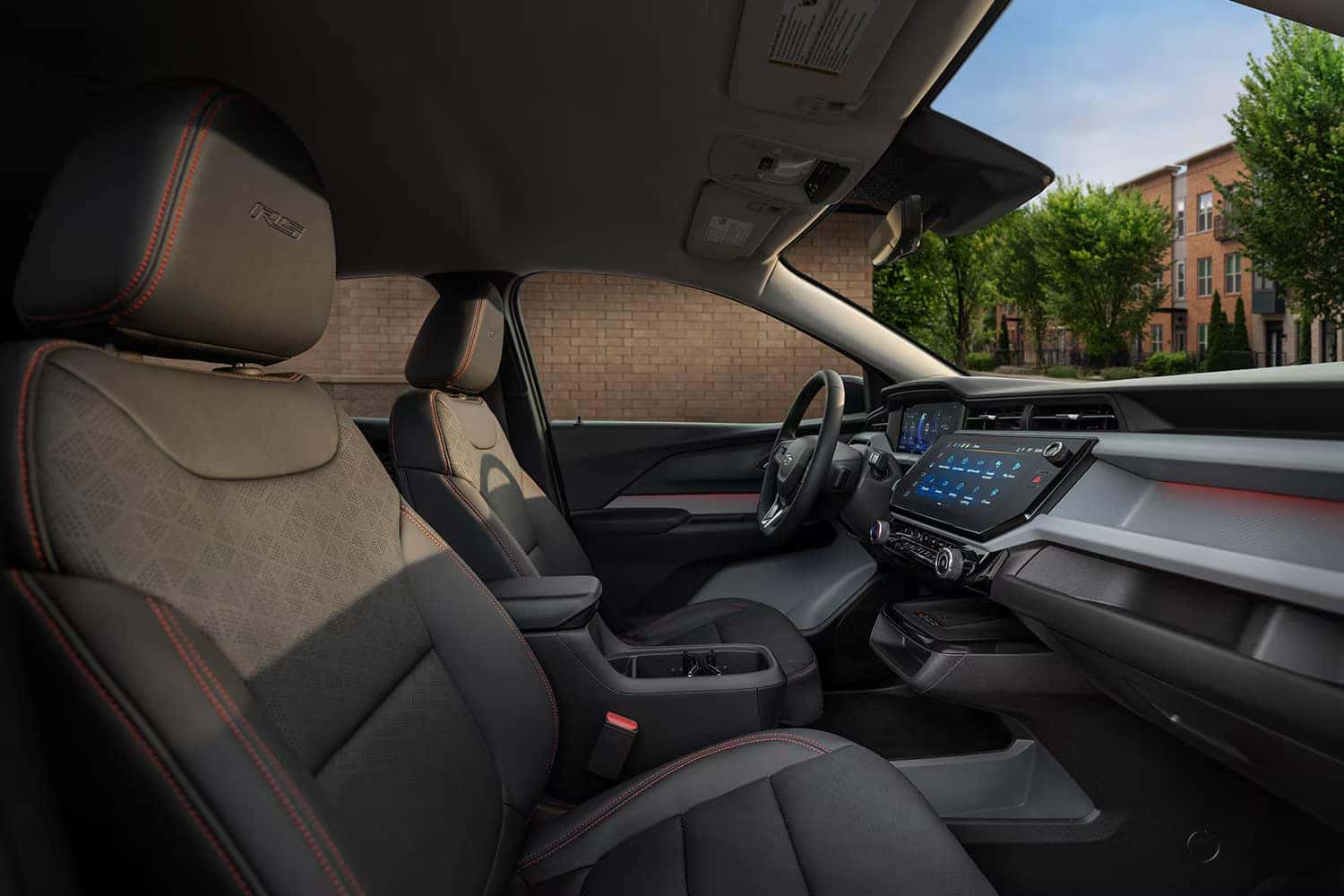
Both vehicles seat five passengers. The Bolt gives front-row occupants 40.0 inches of headroom and 44.3 inches of legroom. The Kona offers 39.9 inches of front headroom and 41.7 inches of front legroom, putting the Bolt slightly ahead in both measurements for the driver and front passenger.
Rear-seat legroom is 39.1 inches in the Bolt versus 38.2 inches in the Kona, another modest Bolt advantage.
Cargo space flips in the Kona’s favor. With seats up, the Kona holds 25.5 cubic feet behind the second row against the Bolt’s 16.2 cubic feet. Folded flat, the Kona expands to 63.7 cubic feet versus the Bolt’s 56.3 cubic feet. Buyers who routinely haul large loads will notice that gap.
On the RS trim, the Bolt adds standard ventilated front seats, heated front seats, a heated steering wheel, an 8-way power driver seat, multi-color ambient interior lighting, and a wrapped steering wheel. The LT offers many of these as options. The Kona Limited adds a Bose premium audio system and a power sunroof, neither of which appears in the Bolt’s option list.
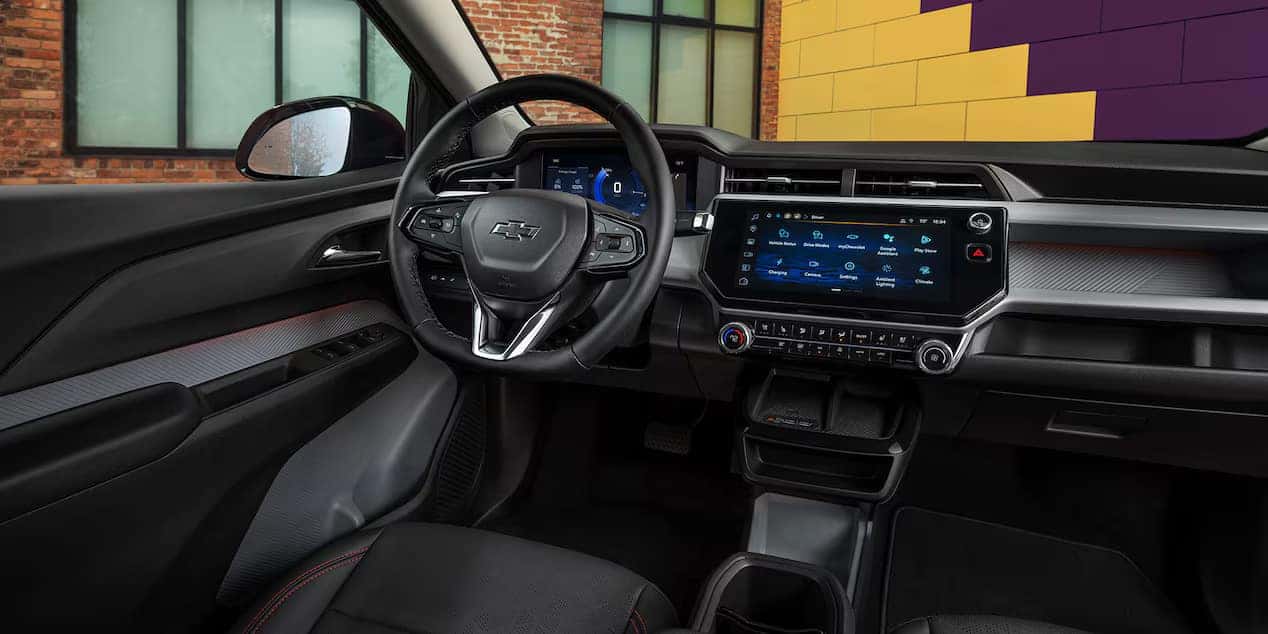
The Bolt runs an 11.3-inch color touchscreen with Google Built-In, giving you native Google Maps, Google Assistant, and the Google Play app store including in-vehicle entertainment apps such as HBO Max, Tubi, and Prime Video. An 11-inch digital driver information center sits ahead of the driver. The Kona counters with a 12.3-inch touchscreen and wireless Android Auto and Apple CarPlay, but its digital gauge cluster is a 4.2-inch display on most trims, only expanding to 12.3 inches on the Limited.
The Bolt is the first Chevrolet EV with a native NACS charge port. DC fast charging reaches up to 150 kW, covering 10 percent to 80 percent in roughly 25 minutes. Level 2 AC charging runs at up to 11.5 kW, adding up to 40 miles per hour. Vehicle-to-Home bidirectional charging is standard, meaning the Bolt can power household circuits during an outage. The Kona has no equivalent charging capability.
Available Super Cruise hands-free highway driving assistance sets the Bolt apart in the driver-assist category. The Kona offers no comparable hands-free highway system.
On standard safety content, both vehicles include forward collision warning with automatic emergency braking, adaptive cruise control, blind-spot warning, lane keeping assist, and rear cross-traffic alert. The Bolt adds Intersection Collision Mitigation and Blind Spot Intervention with steering input as standard. The Kona includes Safe Exit Warning and Rear Occupant Alert as standard, features not listed in the Bolt’s confirmed standard suite.
The Bolt’s 8-year / 100,000-mile battery and electric component warranty covers the most expensive part of the vehicle for a long ownership period. Roadside assistance extends to 5 years / 60,000 miles, with towing covered for 8 years / 100,000 miles. The basic bumper-to-bumper warranty is 3 years / 36,000 miles.
The Kona’s basic warranty is stronger on paper at 5 years / 60,000 miles. Its powertrain warranty runs 10 years / 100,000 miles. Both figures beat the Bolt on the non-battery coverage side.
Efficiency is where the Bolt builds its long-term ownership case. At 120 MPGe combined, the Bolt costs far less per mile in fuel than the Kona at 31 MPG combined FWD. Drivers in the Camby area who log significant weekly mileage will see that efficiency gap compound over time.
You want to stop paying for gasoline, you have access to home charging or a nearby fast-charging network, and you want maximum power from the first moment you press the pedal. The Bolt also suits any buyer who wants bidirectional V2H charging, available Super Cruise hands-free driving, or the Google Built-In infotainment ecosystem. It is a stronger fit for urban and suburban commuters in the Indianapolis metro who drive predictable daily routes.
You want AWD capability, a longer basic warranty, more cargo room with seats up, or the flexibility of a gas engine for long road trips without planning charging stops. The Kona Limited adds premium amenities like a Bose audio system and a power sunroof that the Bolt does not offer.
Greg Hubler Chevrolet stocks the 2027 Bolt in both the LT and RS trims, and the team can walk you through the charging setup, V2H capability, and available Super Cruise demonstration at the store in Camby. Indiana drivers across the greater Indianapolis area can find current inventory and schedule a test drive using the links below.
Yes. The 2027 Bolt is an electric vehicle with 262 miles of EPA-estimated range per charge. The 2027 Kona is a gasoline vehicle rated at 28 city / 35 highway MPG, so the two vehicles are measured on different scales.
The Kona holds more cargo. With rear seats up, the Kona offers 25.5 cubic feet versus the Bolt’s 16.2 cubic feet. Folded flat, the Kona expands to 63.7 cubic feet against the Bolt’s 56.3 cubic feet.
Yes. The Bolt supports DC fast charging at up to 150 kW, bringing the battery from 10 percent to 80 percent in approximately 25 minutes. On a Level 2 home charger, it adds up to 40 miles of range per hour at 11.5 kW.
Yes. Vehicle-to-Home bidirectional charging is standard on the 2027 Bolt, allowing it to send power back to household circuits. The Kona does not offer this capability.
It depends on the coverage you prioritize. The Kona’s basic warranty runs 5 years / 60,000 miles, longer than the Bolt’s 3-year / 36,000-mile bumper-to-bumper coverage. The Bolt’s battery warranty covers 8 years / 100,000 miles, which protects the highest-value component of an EV. The Kona’s powertrain warranty runs 10 years / 100,000 miles.
Super Cruise hands-free highway driving assistance is available on both the LT and RS trims of the 2027 Bolt as an optional package. It is not standard on either trim.
No. The 2027 Bolt is front-wheel drive on both trims. The Hyundai Kona offers AWD as an available option across its lineup.
Greg Hubler Chevrolet in Camby carries the 2027 Bolt. Indiana shoppers from across the Indianapolis area can check current inventory online or schedule a test drive directly through the dealer.
