Sales:
(888) 397-1874
Service:
(317) 831-0770
Parts:
(317) 831-0770
Open Today Sales: 9 AM-7 PM



The 2027 Chevrolet Bolt delivers 262 miles of EPA-estimated range from its 65-kWh battery. That range improves real-world usability compared to earlier Bolt generations, with DC fast charging up to 150 kW. This page covers every charging detail and what each number means for daily driving, with inventory at Greg Hubler Chevrolet.

The 2027 Bolt runs on a 65-kWh lithium-ion battery paired with GM’s X76 permanent-magnet electric motor producing 210 hp and 169 lb-ft of torque. The result is 262 miles of EPA-estimated range on a full charge, which covers most round trips between Camby and Indianapolis comfortably, with substantial reserve remaining.
Both the LT and RS trims share the same battery pack and the same 262-mile range figure. You do not have to step up in trim to get the full range. The EPA combined efficiency rating lands at 120 MPGe, with 134 MPGe in city driving and 106 MPGe on the highway.
2027 Bolt full specs and trims
The 8-year / 100,000-mile battery and electric components warranty backs that pack against defects and capacity loss, which is one of the strongest battery guarantees in this vehicle class.
The 2027 Bolt is the first Chevrolet EV to ship with a native NACS, or North American Charging Standard, charge port. That matters because NACS is now the dominant standard across the U.S. charging network, giving Bolt owners direct access to Tesla’s Supercharger network and every other NACS-compatible public station without an adapter.
Plug into a compatible DC fast charger and the Bolt can accept up to 150 kW of power. At that rate, the battery climbs from 10% to 80% in approximately 25 minutes. For a driver stopping briefly between Camby and a longer destination, that window lines up conveniently with a coffee or lunch break.
The Bolt’s onboard charger is rated at 11.5 kW, which translates to roughly 40 miles of range added per hour on a Level 2 240-volt home charger or public AC station. Overnight charging on Level 2 restores a fully depleted pack well before morning. A standard Dual Level Charge Cord comes with every Bolt on both trims, giving owners a Level 1 120-volt fallback option from day one.
Standard on both trims, the Bolt’s V2H capability lets the battery power household loads during an outage or during peak utility rate hours. With the appropriate home equipment, the Bolt functions as a mobile energy reserve. This feature is increasingly rare at this price point.
One-Pedal Driving mode uses regenerative braking to decelerate the car smoothly when the driver lifts off the accelerator, recapturing kinetic energy back into the battery. In stop-and-go Indianapolis metro traffic, this mode can meaningfully extend real-world range beyond the EPA estimate.
Both the LT and RS share the complete charging hardware suite with no omissions between them on the core items. The table below reflects what is standard and what is available on each trim based on verified specifications.
| Feature | LT | RS |
|---|---|---|
| 65-kWh battery | Standard | Standard |
| 262-mile EPA range | Standard | Standard |
| Native NACS charge port | Standard | Standard |
| DC Fast Charging, up to 150 kW | Standard | Standard |
| 11.5-kW onboard charging module | Standard | Standard |
| Dual Level Charge Cord | Standard | Standard |
| Vehicle-to-Home, V2H | Standard | Standard |
| One-Pedal Driving | Standard | Standard |
| Level 2 and Fast Charging Adapter Package | Available | Available |
| Premium Charging Package | Available | Available |
| Charging Essentials Package | Available | Available |
| GM PowerShift AC Charging Adapter | Available | Available |
| GM Energy PowerShift Charger | Available | Available |
| GM PowerUp 2: NACS Charger | Available | Available |
| Illuminated charge port | Available | Available |
The available packages give buyers flexibility to add home charging hardware or specific adapter types at the time of purchase, rather than sourcing equipment separately.
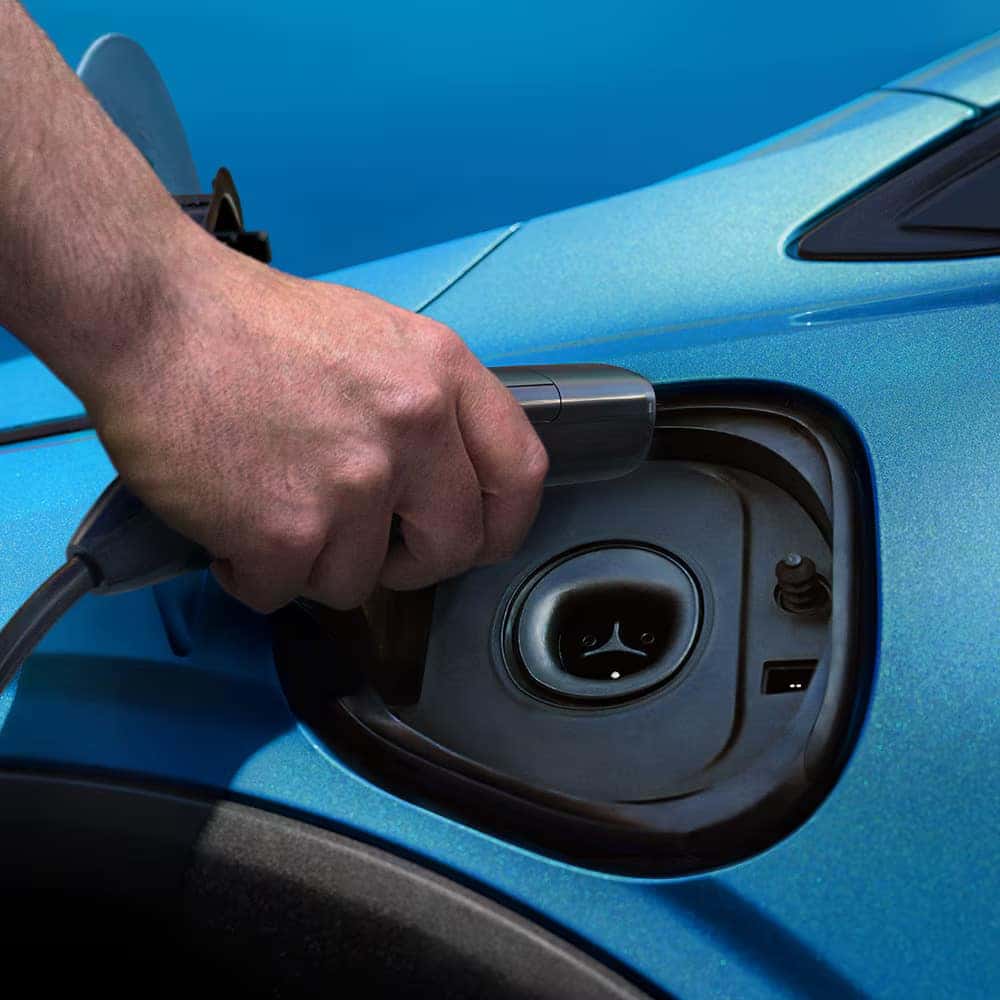
For drivers based in Camby and the surrounding Indiana area, 262 miles of range covers a round trip to most Indiana destinations on a single charge. The Indianapolis metro area has a growing network of NACS-compatible public fast chargers, and the Bolt’s 150-kW acceptance rate means those stops stay brief.
Level 2 charging at 40 miles per hour replenishes the battery fast enough that drivers who plug in when they get home wake up to a full charge every morning without planning around it. Commuters who drive 30 to 50 miles daily will rarely need to think about public charging at all.
The V2H capability adds a layer of energy independence that is practical in Indiana, where severe weather can interrupt grid power. A Bolt with a full charge can supply a meaningful amount of household power during a brief outage, depending on the home setup and loads involved.
One-Pedal Driving is particularly effective on Indiana’s mix of city streets and suburban stop-and-go traffic, where frequent deceleration creates repeated regeneration opportunities. Drivers who use the mode consistently often report real-world range that exceeds the EPA estimate.
The 262-mile range positions the 2027 Bolt well within the mainstream EV segment. Its 150-kW DC fast charging acceptance is a genuine upgrade from earlier models and matches or exceeds many competitors in the segment. The native NACS port removes the adapter step that older EVs with CCS ports require at Supercharger stations.
The V2H bidirectional charging capability is a feature many EVs at higher price points still do not offer as standard equipment. Getting it standard on both Bolt trims, starting with the LT, reflects a meaningful value proposition compared to rivals that reserve bidirectional capability for top-tier trims or exclude it entirely.
The 8-year / 100,000-mile battery warranty extends longer than most mainstream EV competitors’ standard coverage, reducing long-term ownership uncertainty around battery health.
The 2027 Bolt’s battery, range, and charging system are engineered for drivers who want a practical electric car without compromising on real-world usability. Greg Hubler Chevrolet carries current Bolt inventory at the Camby location. Browse the available trims, build your preferred configuration, and schedule a test drive to experience One-Pedal Driving and the full charging setup firsthand.
The 2027 Bolt has an EPA-estimated range of 262 miles on a full charge. Both the LT and RS trims share this figure. Actual range varies based on temperature, driving style, and speed.
The 2027 Bolt uses a native NACS, or North American Charging Standard, charge port, making it the first Chevrolet EV with this port built in. It supports DC public fast charging up to 150 kW and Level 2 AC charging up to 11.5 kW.
On a DC fast charger at the full 150-kW rate, the Bolt charges from 10% to 80% in approximately 25 minutes. On a Level 2 home charger, it adds up to 40 miles of range per hour, making an overnight charge from near-empty to full a realistic everyday routine.
Yes. V2H bidirectional charging is standard on both the LT and RS trims. With the appropriate home charging equipment, the Bolt can send power from its battery back to household loads.
A Dual Level Charge Cord is standard on both trims, providing a Level 1 120-volt option out of the box. Additional home charging equipment, including the GM Energy PowerShift Charger and GM PowerUp 2: NACS Charger, is available as an option at the time of purchase.
Yes. The native NACS charge port gives the 2027 Bolt direct compatibility with Tesla Supercharger stations and all other NACS-network fast chargers, with no adapter required.
The battery and electric components are covered for 8 years or 100,000 miles, whichever comes first. The vehicle’s bumper-to-bumper warranty covers 3 years or 36,000 miles.
Yes. The core charging hardware, including the 65-kWh battery, native NACS port, 150-kW DC fast charging, 11.5-kW onboard module, Dual Level Charge Cord, and V2H capability, is standard on both the LT and RS. Optional charging packages are available on both trims as add-ons.
