Sales:
(888) 397-1874
Service:
(317) 831-0770
Parts:
(317) 831-0770
Open Today Sales: 9 AM-7 PM



The 2026 Chevrolet Blazer tows up to 4,500 lbs when equipped with the available Trailering Package and 3.6L V6. The RS trim is the only model offering the V6, making trim selection the single most important towing decision. This guide breaks down capacity, equipment, and trim differences so you can shop Blazer inventory with confidence.
The 2026 Blazer sits in a useful towing category for midsize SUV buyers. A 4,500-lb rating covers a wide range of real-world loads: a jon boat, a single-axle utility trailer, a jet ski on a trailer, or a small camper. That number requires the RS trim with the 3.6L V6 and the Trailering Package. Buyers on the 2LT or 3LT, which run the 2.0L turbocharged four-cylinder, should factor in that Chevrolet lists trailering equipment as available on those trims but the 4,500-lb maximum is tied to the V6.
Ground clearance sits at 7.5 inches on the 2LT and 3LT and 7.6 inches on the RS, giving the Blazer enough lift to approach a boat ramp or rough campsite access road without scraping the underside. A 7 airbag suite, StabiliTrak electronic stability control, and 4-wheel antilock disc brakes give the tow vehicle itself a stable platform before a trailer even enters the equation.
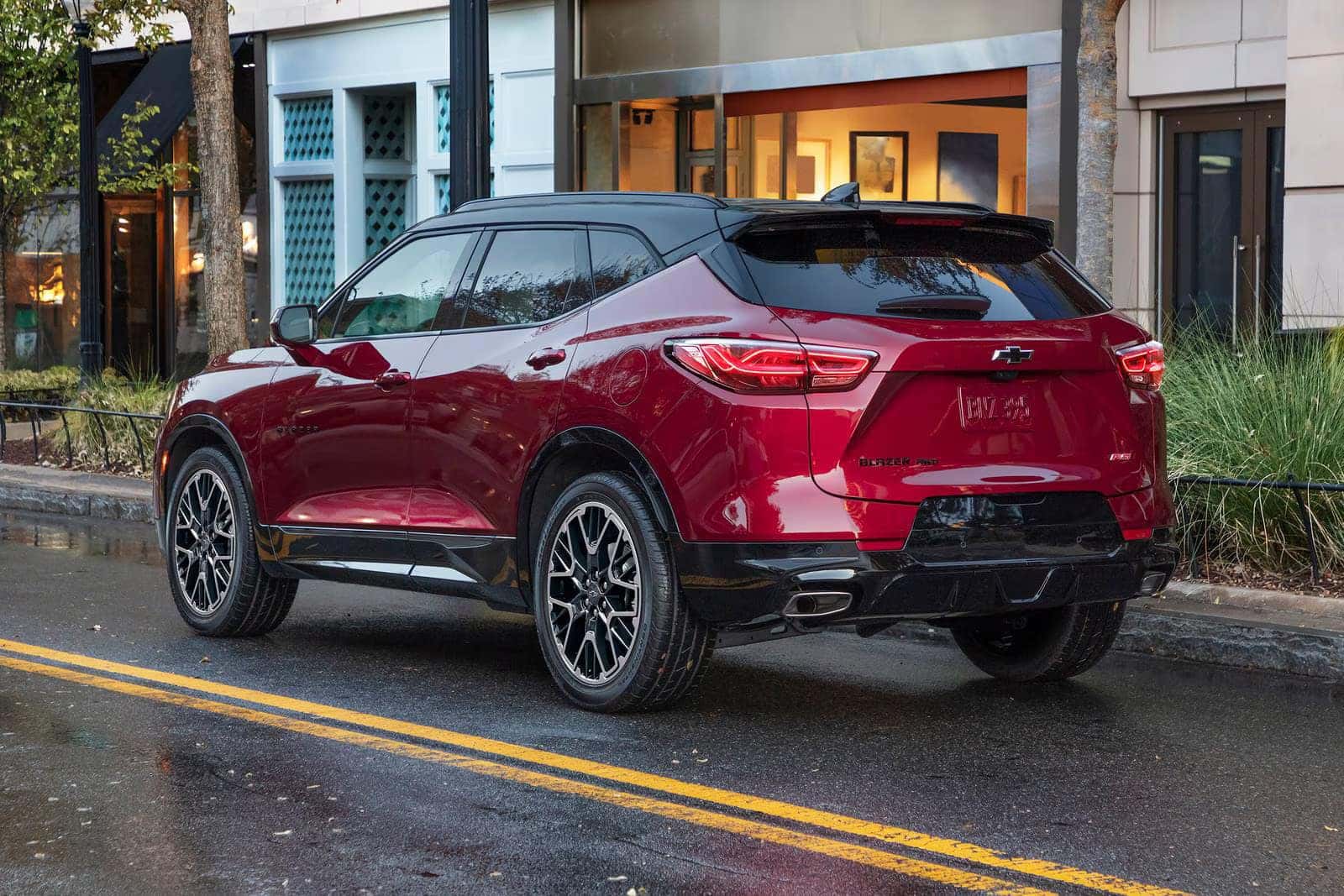
The Trailering Package adds trailer-specific wiring and hitch equipment. On AWD RS models, the Blazer uses an advanced twin-clutch all-wheel drive system, which actively distributes torque between axles. That torque split matters when pulling a trailer because it reduces rear-axle spin during acceleration, keeping the trailer tracking straight off the line.
The 3.6L V6, available exclusively on the RS, pairs with a 9-speed automatic transmission and a 3.49 axle ratio, which is numerically higher than the 3.47 ratio on 2LT and 3LT. The higher axle ratio multiplies torque at the wheels, which translates to stronger initial pull when a loaded trailer is sitting on a grade or on a boat ramp.
The standard Hitch Guidance feature on AWD models uses the rear camera to display a guide overlay, helping drivers line up the hitch ball with a trailer coupler without a spotter. FWD models on the 2LT and 3LT show Hitch Guidance as available rather than standard, and Hitch View is listed as available on the 3LT AWD and standard on the RS AWD. Both functions use the existing HD Rear Vision Camera system so no additional camera hardware is required.
The 9-speed automatic transmission includes a Driver Mode Selector, letting the driver shift modes based on load condition. Engaging the appropriate mode helps the transmission hold lower gears longer when descending hills with a trailer attached, reducing brake fade on long grades.
Not every Blazer configuration delivers the same towing story. Here is how the three trims break down:
The 2LT runs the 2.0L turbocharged four-cylinder producing 228 hp and 258 lb-ft of torque. Trailering equipment is listed as available, meaning buyers can add it. The Driver Confidence Package is standard, adding Lane Change Alert with Side Blind Zone Alert, Rear Park Assist, and Rear Cross Traffic Alert, all of which remain useful when a trailer is attached. Hitch Guidance is standard on the AWD version.
The 3LT matches the 2LT powertrain but steps up interior content. Trailering equipment remains an available add-on. Hitch View is available on the AWD 3LT, adding the camera overlay to the rear vision display. HD Surround Vision, available on the 3LT, gives a bird’s-eye camera perspective that helps when maneuvering a trailer in a tight lot.
The RS is the towing-focused choice. It is the only trim offering the 3.6L V6 along with its 9-speed automatic calibrated for the larger engine and a 3.49 axle ratio. On the AWD RS, Hitch Guidance and Hitch View are both standard. The advanced twin-clutch AWD system, listed as standard on the RS AWD configuration, provides the most confident pull when road conditions deteriorate. HD Surround Vision is also standard on the RS, giving a full camera view during hookup and maneuvering.
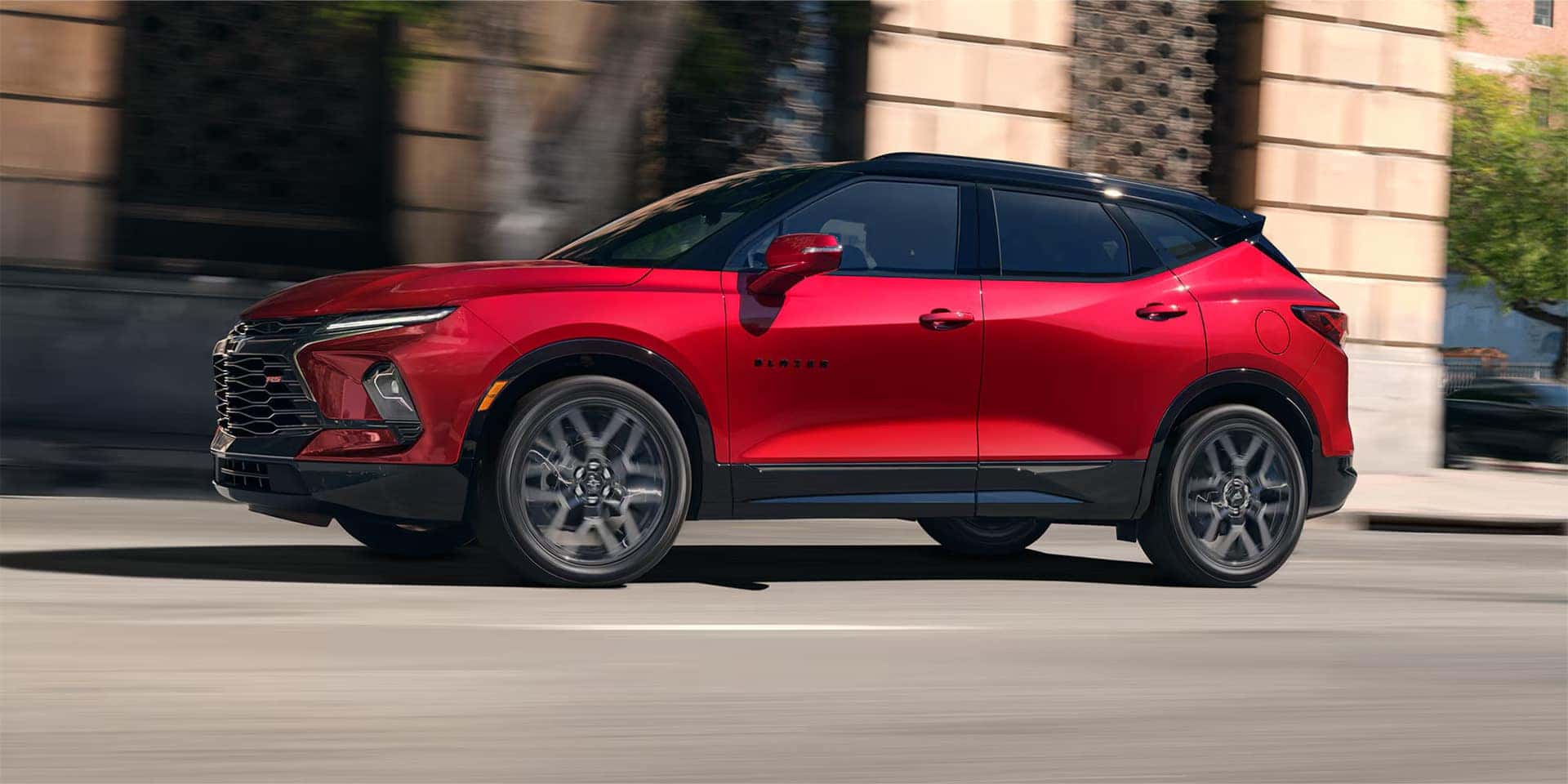
Camby sits less than 30 miles from several popular Indiana lakes and reservoirs. Buyers using a Blazer to pull a fishing boat to Monroe Lake or a pontoon to Eagle Creek Reservoir will want to be honest about trailer weight before choosing a trim. A loaded fishing boat with a trailer often lands in the 2,500 to 3,500 lb range, which falls well within the Blazer’s capacity on any trim when the Trailering Package is added. A larger pontoon or a pop-up camper pushing toward 4,000 lbs makes the RS V6 the safer pick, both for rated capacity and for the added confidence of the AWD twin-clutch system on wet boat ramps.
The Rear Seat Reminder, standard across all trims, is a practical feature for families who load gear in the back seat before a weekend trip. Teen Driver Technology, also standard on every trim, lets parents set parameters when younger drivers use the vehicle, which becomes relevant when the vehicle is also used for towing by other household members.
FWD trims on 2LT and 3LT return 22 city / 29 highway / 25 combined MPG on the FWD four-cylinder. AWD trims return 22 city / 27 highway / 24 combined. Towing reduces fuel economy further, so factoring in the AWD fuel economy number as a realistic floor for towing trips helps with trip planning.
The 4,500-lb tow rating on the RS V6 is competitive in the midsize two-row SUV segment. The Blazer’s twin-clutch AWD system on the RS AWD is a specific differentiator because it uses active clutches rather than a purely reactive coupling, meaning torque reaches the rear axle before wheelspin starts. Many competitors at this price point use a reactive coupling that waits for front slip before sending power rearward.
The Blazer’s 7.5-inch ground clearance on the 2LT and 3LT, and 7.6 inches on the RS, competes well against other mainstream midsize SUVs that frequently land between 7 and 8 inches. That clearance supports approach to uneven ramps and unpaved campsite roads.
The standard Chevy Safety Assist suite includes Forward Collision Alert with Automatic Emergency Braking and Lane Keep Assist with Lane Departure Warning. Both systems function on the tow vehicle side regardless of trailer presence, which remains a meaningful distinction when a loaded trailer extends stopping distance.
If towing is a priority, the trim and equipment choice matters as much as the vehicle itself. Greg Hubler Chevrolet in Camby stocks 2026 Blazer inventory across trims so you can compare the RS V6 AWD against the 2LT and 3LT configurations in person before deciding.
Up to 4,500 lbs when equipped with the available Trailering Package and the 3.6L V6 engine. The V6 is available only on the RS trim.
The RS is the best towing choice because it is the only trim offering the 3.6L V6, and the RS AWD adds the advanced twin-clutch all-wheel drive system and a 3.49 axle ratio for stronger pull.
Yes. The 2LT and 3LT offer trailering equipment as an available add-on with the 2.0L turbocharged four-cylinder. The towing capacity on those trims with the four-cylinder is not listed in Chevrolet’s verified specs, so confirm the rated number with Greg Hubler Chevrolet before committing to a specific trailer weight.
Hitch View uses the rear camera to display a guide overlay that helps you align the hitch ball with a trailer coupler without needing a spotter. It is available on the 3LT AWD and standard on the RS AWD.
Yes. The RS AWD uses an advanced twin-clutch all-wheel drive system that actively distributes torque between axles, providing more consistent traction than a reactive coupling system during acceleration with a trailer attached.
Ground clearance is 7.5 inches on the 2LT and 3LT, and 7.6 inches on the RS, giving enough clearance for uneven boat ramps and light off-pavement approaches.
HD Surround Vision is available on the 3LT and standard on the RS. It provides a bird’s-eye camera view useful for maneuvering a trailer in tight spaces.
Yes. The FWD four-cylinder Blazer is EPA-rated at 25 combined MPG and the AWD version at 24 combined. Actual fuel economy will be lower when towing, so use the AWD figure as a planning baseline for trailer trips.
