Sales:
(888) 397-1874
Service:
(317) 831-0770
Parts:
(317) 831-0770
Open Today Sales: 9 AM-7 PM



The FWD 2027 Chevrolet Blazer EV leads the 2026 Honda Prologue by 4 miles of EPA-rated range, at 312 vs 308 miles. The Blazer EV also adds a 17.7-inch touchscreen and standard NACS port that the Prologue does not offer. This page breaks down every key difference so you can choose the right electric SUV at Greg Hubler Chevrolet.
Full 2027 Blazer EV trim details
The 2027 Blazer EV is the stronger choice for buyers who want maximum range on the FWD configuration, a larger touchscreen, and native Tesla Supercharger access through the standard NACS port. The 2026 Honda Prologue makes sense for buyers already comfortable in the Honda ecosystem who prefer a slightly lower entry point and a towing-rated powertrain, at 1,500 lbs. Neither vehicle has a significant cargo or safety disadvantage over the other.
| Spec | 2027 Blazer EV FWD LT | 2026 Honda Prologue EX FWD |
|---|---|---|
| EV Range | 312 miles | 308 miles |
| Battery | 85 kWh | 85 kWh |
| Drivetrain Options | FWD or AWD | FWD or AWD |
| Seating | 5 | 5 |
| Cargo Behind 2nd Row | 25.5 cu ft | 23.7 cu ft EX / 25.2 cu ft EX FWD |
| Max Cargo | 59.1 cu ft | 57.7 cu ft |
| Touchscreen | 17.7 in | 11.3 in |
| Charge Port | NACS standard | CCS, J1772 AC |
| Onboard Charging | 11.5 kW | 34.1 miles per hour Level 2 |
| Super Cruise | Available / Standard on SS | Not available |
| Towing | Not rated | 1,500 lbs |
| Basic Warranty | 3 yr / 36,000 mi | 3 yr / 36,000 mi |
| Battery Warranty | 8 yr / 100,000 mi | 8 yr / 100,000 mi |
| MPGe, City / Hwy / Combined FWD | 114 / 95 / 104 | 113 / 94 / 104 |
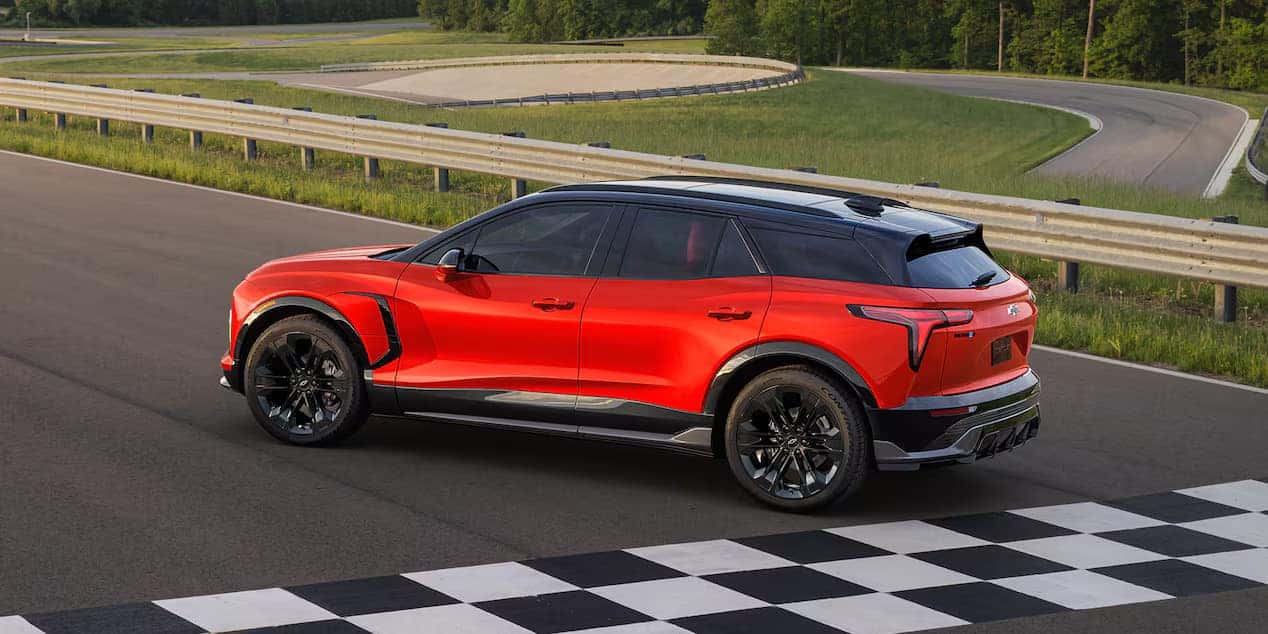
The Blazer EV LT FWD and RS FWD both deliver an EPA combined rating of 104 MPGe, matching the Prologue EX FWD at 104 MPGe. City efficiency favors the Blazer EV slightly at 114 MPGe vs 113 MPGe for the Prologue EX FWD.
Both vehicles use an 85 kWh battery on their base FWD configurations. The Blazer EV SS steps up to a 102 kWh battery and a Performance Dual Motor AWD setup, with Brembo brakes and bronze-painted calipers as part of a dedicated performance package. The Prologue Elite AWD tops out at 300 hp and 355 lb-ft, with no equivalent high-performance trim structure.
The Blazer EV uses one-pedal driving with regenerative braking. The Prologue uses a regenerative braking paddle shifter. Both approaches recover energy effectively; the Blazer EV’s system is more seamless for stop-and-go commuting, while the Prologue gives drivers manual control over regen levels.
The Prologue carries a 1,500-lb tow rating. The Blazer EV is not rated for towing. Buyers who need to tow a small trailer or PWC should consider the Prologue for that use case.
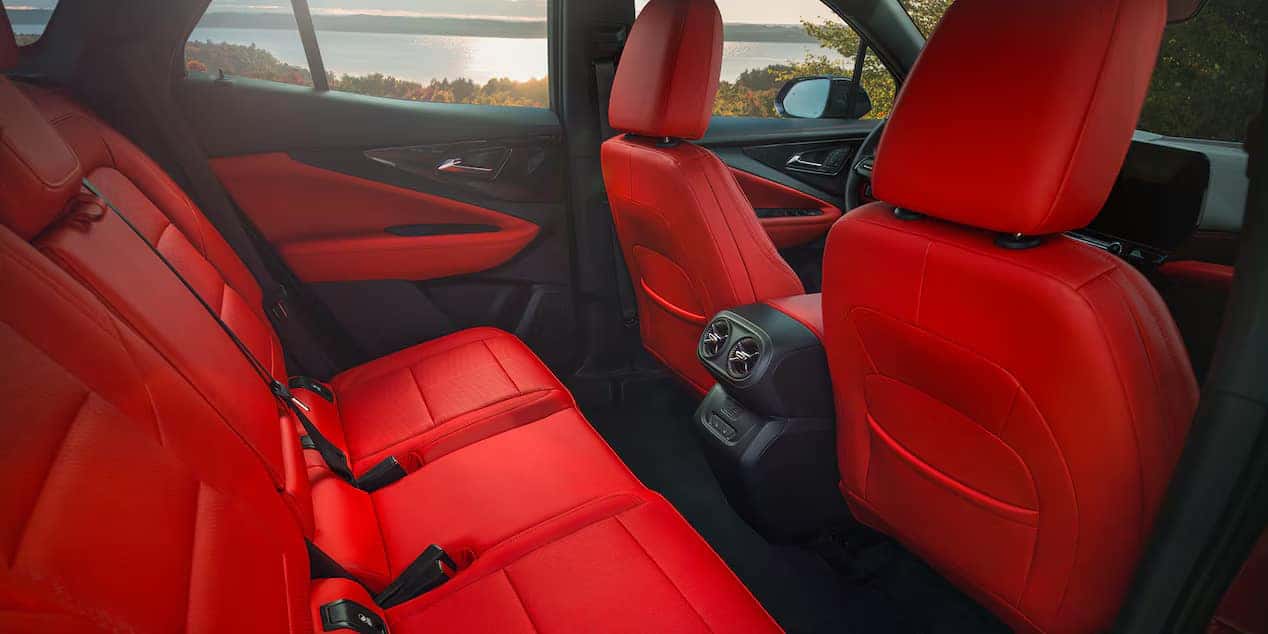
Both SUVs seat five and share a 121.8-inch wheelbase. The overall footprint is nearly identical: the Blazer EV measures 192.23 inches long and the Prologue 192.0 inches.
Cargo is a genuine Blazer EV advantage. With the rear seat up, the Blazer EV offers 25.5 cu ft behind the second row. The Prologue EX FWD offers 25.2 cu ft in that same configuration, and the Prologue Touring and Elite drop to 23.7 cu ft. Maximum cargo with seats folded reaches 59.1 cu ft in the Blazer EV vs 57.7 cu ft in the Prologue top trim.
Front headroom is 40.88 inches in the Blazer EV. The Prologue EX offers 39.6 inches up front, while the Touring and Elite drop further to 38.2 inches. Rear legroom is 38.92 inches in the Blazer EV vs 39.4 inches in the Prologue, a negligible real-world gap.
On interior appointments, the RS and SS Blazer EV trims add ambient interior lighting, ventilated front seats, heated rear outboard seats, a flat-bottom wrapped steering wheel, and driver memory settings as standard features. The Prologue Touring reaches comparable content at its respective trim level, and the Elite adds ventilated front seats and a panoramic moonroof not available on the Blazer EV.
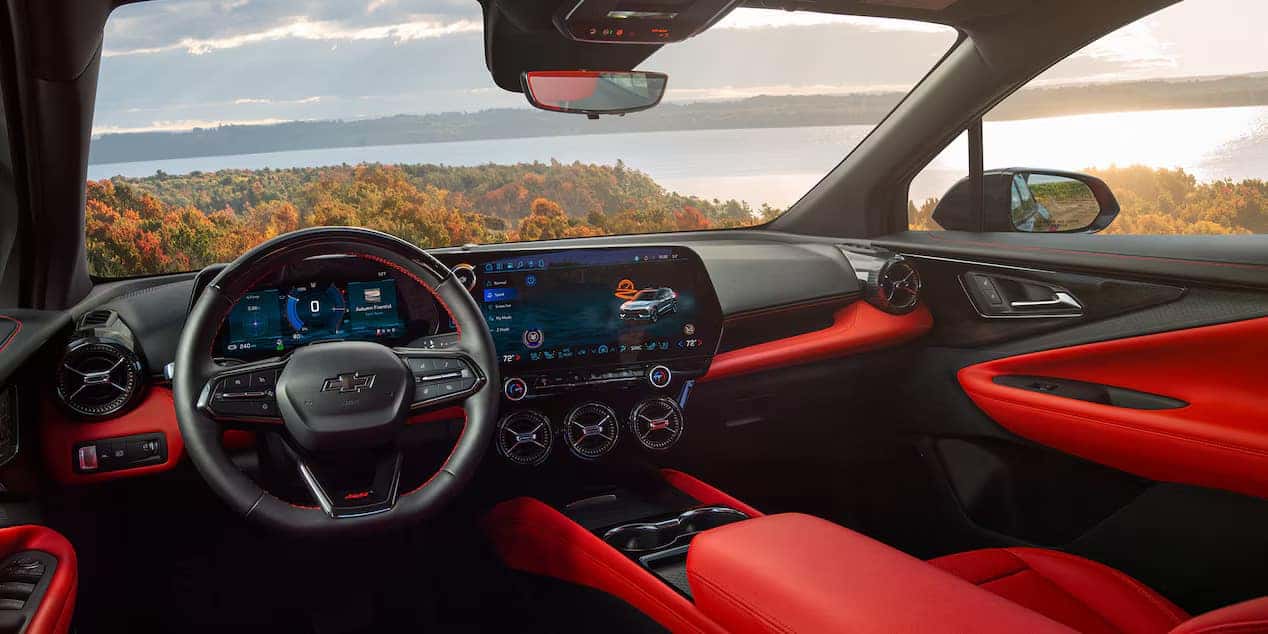
The Blazer EV’s 17.7-inch touchscreen is the single largest display advantage in this comparison. The Prologue runs an 11.3-inch screen. Both systems use Google built-in and support wireless Apple CarPlay and Android Auto.
Charging infrastructure access is where the Blazer EV creates a clear practical edge. The standard NACS port lets every Blazer EV owner plug into the Tesla Supercharger network without an adapter. The Prologue uses CCS and requires an adapter for Supercharger access. The Blazer EV also supports 11.5 kW onboard AC charging and is compatible with Level 1 120V and Level 2 240V home charging. The myChevrolet app includes a public charger finder and route planning tied to real-time state of charge.
The Blazer EV RS and SS add Super Cruise, Chevrolet’s hands-free driver assistance system for mapped highways. Super Cruise is not available on the Prologue. For buyers who spend time on Indiana interstates between Camby and Indianapolis, that hands-free capability is a meaningful daily difference.
Both vehicles include forward collision warning, automatic emergency braking, lane keep assist, blind zone steering assist, and rear cross-traffic braking as standard equipment. The Blazer EV adds HD Surround Vision standard across all trims. The Prologue’s Surround Vision system is available only on higher trims.
Vehicle-to-home, or V2H, capability is standard on every Blazer EV trim. The Prologue does not list V2H in its verified specifications.
Both vehicles carry a 3-year / 36,000-mile bumper-to-bumper warranty and an 8-year / 100,000-mile battery and electric components warranty. Roadside assistance extends to 5 years / 60,000 miles on both, with towing covered to 8 years / 100,000 miles on the Blazer EV.
The Blazer EV includes one complimentary scheduled maintenance visit at 12 months or 12,000 miles. Standard 5G vehicle connectivity and OnStar services come on every trim.
The Blazer EV SS adds 3 years of OnStar One as standard. OnStar One is available as an add-on across all Blazer EV trims, with an extension plan to 8 years available for owners who add Super Cruise.
The Prologue benefits from Honda’s established service network, which may be relevant for buyers outside the Chevy dealer footprint. Within Greg Hubler Chevrolet’s service area covering Camby and the broader Indianapolis region, Blazer EV service and charging support are readily accessible.
You want the longest FWD range at 312 miles, native Supercharger access through the NACS port, a large 17.7-inch touchscreen, hands-free highway driving via Super Cruise, or V2H capability for home energy use. The SS trim is the right call for performance-focused buyers who want Brembo brakes and a 102 kWh battery.
You need a rated tow capacity of 1,500 lbs, prefer the Honda Sensing suite in a familiar Honda ownership experience, or want a panoramic moonroof at the Elite trim level. The Prologue EX also enters the segment at a lower starting point.
Greg Hubler Chevrolet stocks the 2027 Blazer EV across FWD and AWD configurations, from the LT through the performance-focused SS. The team at the Camby location can walk you through Super Cruise, demonstrate the NACS charging setup, and put you in the driver’s seat for a real-world test of the 17.7-inch display. Current inventory is online now.
Yes. The FWD 2027 Blazer EV, including LT and RS, is EPA-rated at 312 miles of range. The FWD 2026 Honda Prologue EX and Touring are rated at 308 miles. The Blazer EV SS AWD is rated at 302 miles, and the Prologue Elite AWD is rated at 283 miles.
Yes. Every 2027 Blazer EV comes with a standard NACS charge port, which is compatible with the Tesla Supercharger network without an adapter.
No. Super Cruise is not offered on the 2026 Honda Prologue. It is available on all 2027 Blazer EV trims and standard on the SS.
The Blazer EV carries 25.5 cu ft behind the second row and 59.1 cu ft maximum. The Prologue Touring and Elite offer 23.7 cu ft behind the second row and 54.5 cu ft maximum, so the Blazer EV has a clear cargo advantage on those trim comparisons.
The verified specs provided for the 2027 Blazer EV do not include a published tow rating. The 2026 Honda Prologue is rated to tow 1,500 lbs. Buyers with towing needs should confirm current Blazer EV tow specifications with Greg Hubler Chevrolet before purchasing.
The 2027 Blazer EV battery and electric components are covered for 8 years or 100,000 miles, matching the Honda Prologue’s high-voltage battery warranty.
Yes. V2H is standard on every 2027 Blazer EV trim. The 2026 Honda Prologue does not list V2H capability in its verified specifications.
